Traditional & Modern Lime Render · Plymouth, Devon & Cornwall
Lime Render Contractors in Devon & Cornwall
Lime render for period properties, listed buildings, and new builds where breathability matters. External and internal. Correctly specified, correctly applied.
Lime Render: The Right Material for the Right Building
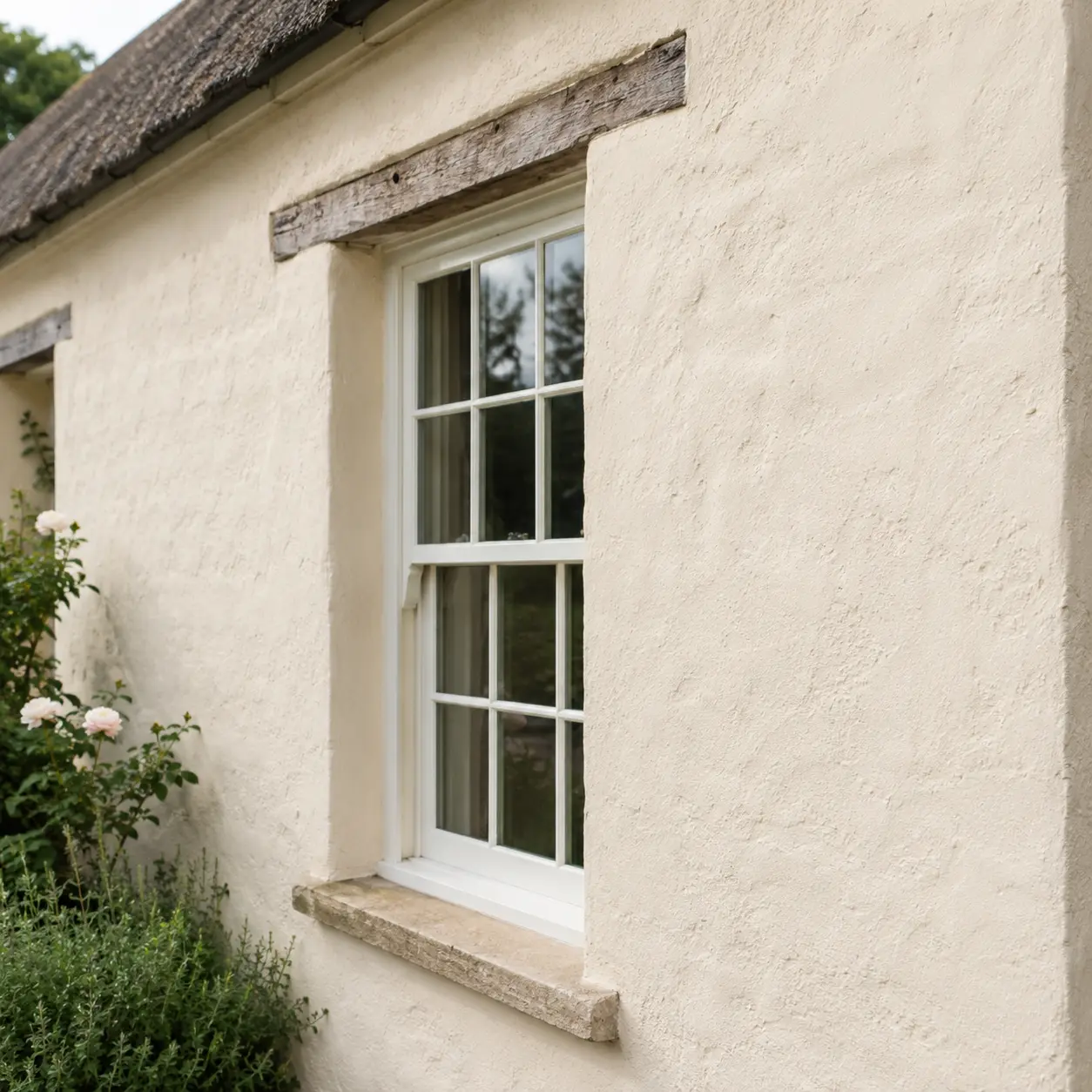
Lime render has been used on British buildings for centuries, and for good reason. It is flexible enough to accommodate the natural movement of old masonry without cracking. It is breathable, allowing moisture to pass through the wall and evaporate rather than becoming trapped. And it is the only render material appropriate for the vast majority of Devon and Cornwall's pre-1920 building stock.
Riley's Pro Trowel supplies and applies lime render across Plymouth, Devon, and Cornwall. Every job starts with understanding the building: the substrate type, its age and condition, existing moisture levels, and any conservation or listed building requirements. From that assessment, we specify the right lime render system, not a compromise, the correct one.
External Lime Render
External lime rendering is applied in multiple coats: a scratch coat keyed to the substrate, a float coat building up the level, and a finish coat brought to the specified texture. Aggregates are selected to match the regional character of the building. Local sands vary across Devon and Cornwall and the mix must reflect that. Hair reinforcement in the base coats adds tensile strength and controls shrinkage cracking.
Finish options include sand float, smooth, roughcast, harling, and through-coloured hydraulic lime. Where lime wash or breathable silicate paint is required, we advise on the correct product and application timing. Lime render must be fully cured before decoration.
Internal Lime Render & Plastering
Internal lime render is used on solid masonry, stone, cob, and lath and plaster substrates. It is the correct internal finish for any solid-wall building where gypsum plaster would trap moisture and cause long-term damp problems. Applied in two or three coats, it produces a smooth, paintable surface that manages condensation and moisture naturally.
Devon & Cornwall Specific
The building stock of Devon and Cornwall is unusually varied: granite in West Cornwall, slate in parts of Cornwall and Devon, sandstone around Exeter and East Devon, cob almost everywhere in rural Devon and parts of Cornwall, and brick in the urban areas. Each substrate requires a different lime specification. A mix appropriate for granite will behave differently on cob. Riley's understands these distinctions and specifies accordingly.
How We Work
Our Process
Survey & Specification
We visit the site, assess the substrate, check moisture levels, and review any planning or listed building constraints. We produce a written specification before any work begins.
Substrate Preparation
Failed or inappropriate render is removed. The wall is inspected and any repairs to the underlying masonry made. The surface is dampened before each coat application. Dry substrate pulls moisture from the lime too quickly and causes failure.
Scratch Coat
The first coat is scratched (keyed) while still green to provide a mechanical key for the subsequent coat. Allowed to cure fully, typically 3 to 7 days depending on conditions.
Float Coat
The float coat builds up the render to the correct level and provides the base for the finish. Rule-straightened, left with a textured surface to receive the finish coat.
Finish Coat & Completion
The finish coat is applied to the specified texture. Arises, reveals, and details are finished. Curing is managed and the render protected from frost, direct sun, and drying winds throughout.
Questions
Frequently Asked Questions
Get Started
Request a Quote
We visit the site, assess what's needed, and provide a written quote. No hidden additions.