Home / Breathable Render Systems

Devon & Cornwall · Specialist Breathable Render

Breathable Render Systems for Heritage & Period Properties

The correct breathable render system prevents trapped moisture, damp, and long-term structural damage in solid-wall buildings. We specify and apply the right system for your building, not a generic product.

  • Site visit firstWe assess what’s needed
  • Written quoteNo hidden additions
  • Fully insuredResidential, commercial & renovation
  • Plymouth · Devon · CornwallBased in Plymouth
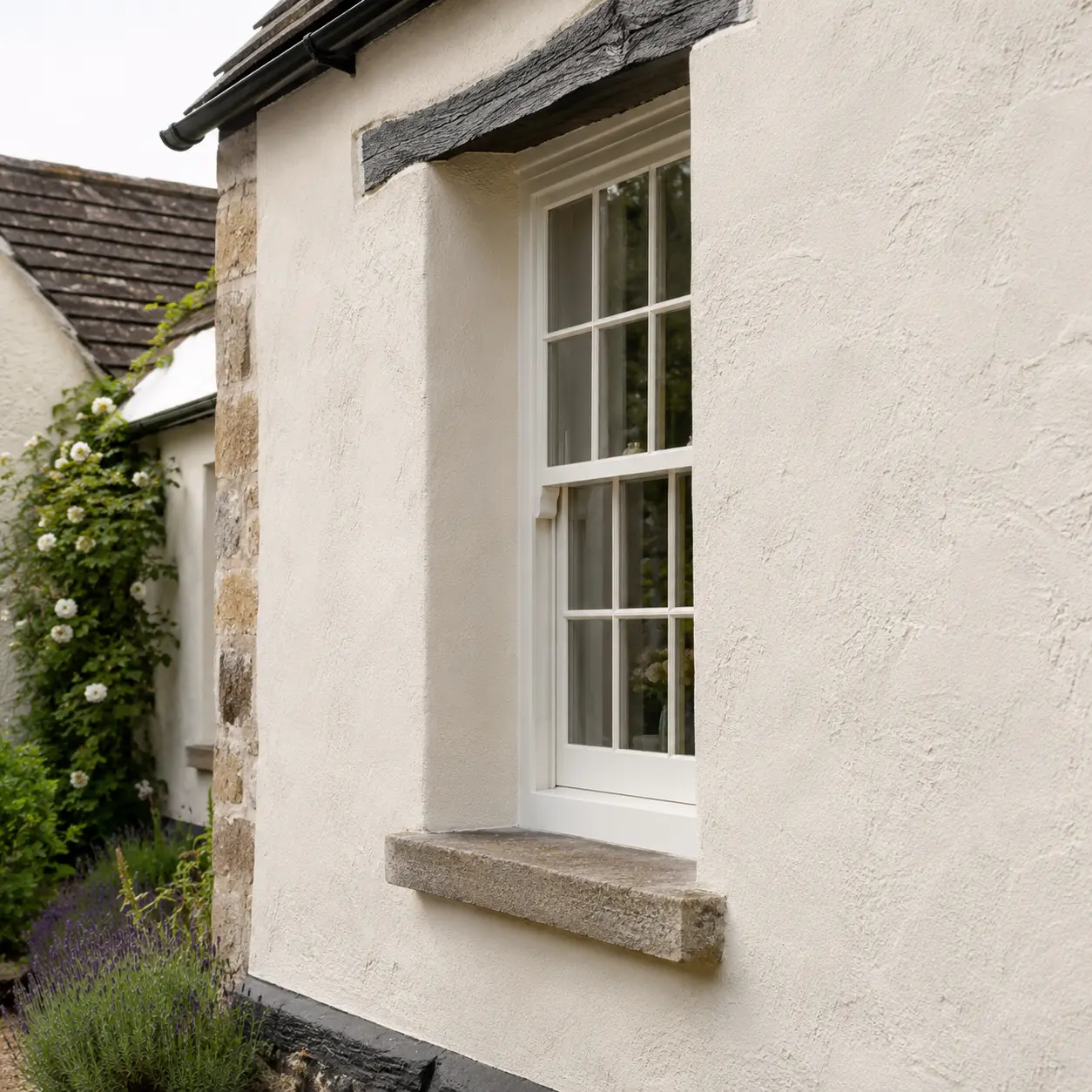
Breathable render system application — Riley's Pro Trowel Devon

Overview

What Is a Breathable Render System?

A breathable render system is one that allows water vapour to pass through the render and out of the wall, replicating the behaviour of the original building materials. In a traditional stone, brick, or cob building, any solid-wall construction built before around 1920, the fabric is designed to absorb moisture and release it as conditions allow. That is how these buildings manage rain, condensation, and ground moisture.

When a modern, cement-based render is applied to these walls, the vapour permeability drops dramatically. Moisture that would previously have evaporated through the render is now trapped between the render and the masonry. The consequences are predictable: internal damp, spalling of the substrate, salt deposits on interior walls, and over time, structural damage.

The term "breathable render" covers several different systems. The right one depends on the building. Riley's assesses each property individually and specifies accordingly.

In detail

What’s involved

01

Breathable Render System Types

Natural Hydraulic Lime (NHL)

The most commonly specified breathable render system for heritage buildings in the UK climate. Sets through hydraulic reaction with water, making it suitable for Devon and Cornwall's wet weather. Available in NHL 2 (softest, for stone and cob), NHL 3.5 (most common for external render), and NHL 5 (stronger, for harder substrates). Highly breathable, flexible, and durable.

Lime Putty (Non-Hydraulic Lime)

The softest and most breathable option. Sets through carbonation (reaction with air) rather than hydraulic reaction, which is a much slower process. Ideal for very soft substrates, historic repairs where matched flexibility is critical, and internal lime plastering. Not recommended for exposed external renders in the South West climate.

Insulating Lime Render

Combines the breathability of lime with improved thermal performance. Products such as cork-based insulating lime, perlite-aggregate lime, or aerogel-enhanced systems can improve the U-value of solid walls without sacrificing vapour permeability. Increasingly used on heritage buildings where energy performance improvement is required but solid wall insulation boarding is inappropriate.

Through-Coloured Hydraulic Lime Systems

Pre-coloured hydraulic lime render systems that combine breathability with a maintenance-friendly finish. No painting required. Colour is integral to the mix.. Suitable for conservation areas and properties where lime washing every few years is impractical.
02

When to Specify a Breathable Render System

Any building with solid walls constructed before approximately 1920 should have a breathable render system. This includes: listed buildings of all grades, Victorian terraces, Georgian townhouses, traditional stone farmhouses and cottages, cob-walled buildings (essentially all pre-1900 rural Devon buildings), converted barns, and ecclesiastical buildings. If your building has any of these characteristics and currently has cement render applied, damp problems are likely, and a breathable render system is the correct long-term solution.

How we work

Our process

  1. 01

    Building Assessment

    We assess the wall construction, existing render condition, substrate moisture levels, and any evidence of damp or salt damage. This determines the specification. There is no one-size-fits-all breathable render system.

  2. 02

    System Specification

    We select the appropriate lime type (NHL grade or putty), aggregate specification, and coat structure. For insulating lime render, we calculate the improvement to U-value. Specification is in writing and referenced against the assessment.

  3. 03

    Removal of Incompatible Render

    Any cement or inappropriate render is removed carefully to avoid damaging the substrate. On historic masonry, mechanical stripping tools are avoided where hand removal is possible. The wall is inspected for damage and repairs made before rendering begins.

  4. 04

    Application in Coats

    The breathable render system is applied in the specified coat structure. Each coat is allowed to cure before the next. Application conditions (temperature, humidity, wind) are monitored throughout. Curing is managed and the render protected where needed.

  5. 05

    Finishing

    The topcoat is applied and finished to the specified texture and appearance. Lime wash or breathable silicate paint is applied where included in the specification. Written aftercare guidance is provided to the client.

Dartmouth Heritage Lime Render

Featured project

Dartmouth Heritage Lime Render

Traditional lime render for a heritage property in Dartmouth, Devon.

View the project

What clients say

Reviews

"Riley's understood exactly what was needed from the first visit. Correct specification, proper curing time, no cutting corners. The conservation officer passed the work without comment."

Richard H. South Devon

"Venetian plastering throughout our Plymouth townhouse. Meticulous work, superb finish, and the team were professional and tidy throughout."

Caroline W. Plymouth

"Used Riley's for a full re-render on our Cornwall holiday property. Clean, consistent finish and the property has held up well through two winters since."

Mark T. Cornwall

Questions

Frequently asked questions

What is a breathable render system and why do old buildings need one?

A breathable render system is one that allows water vapour to pass through the render and out of the wall. Old buildings (stone, cob, solid brick) manage moisture by allowing it to move through the fabric and evaporate. Cement render blocks this process, trapping moisture in the wall and causing damp, spalling, and structural damage over time. A breathable lime render system replicates the original behaviour of the building materials and is essential for the long-term health of traditional buildings.

Is breathable render more expensive than standard render?

Lime-based breathable render systems typically cost more per square metre than sand-and-cement render because the materials cost more, application is more labour-intensive, and correct curing management requires more time on site. However, the cost comparison changes significantly when you account for the damage caused by inappropriate render: damp treatment, internal plasterwork, decorating, and structural repairs can far exceed the premium on a correct breathable system at the outset.

Can any plasterer apply breathable lime render?

No. Lime render behaves differently from gypsum and cement-based products. It sets more slowly, requires different application techniques, and demands correct curing management. Applied incorrectly (over-wet, in frost, in direct sun, or without adequate curing time between correct curing between coats) it will fail. Riley's has extensive experience with lime render and breathable systems. We do not apply these materials casually.

What is the difference between NHL render and lime putty render?

Natural Hydraulic Lime (NHL) sets through a hydraulic reaction with water, producing a render that is reasonably weather-resistant during curing, suitable for the South West's wet climate. Lime putty is non-hydraulic, setting solely through carbonation (absorbing CO2 from the air). It produces the softest, most breathable, and most flexible render possible, but is slower to set and more vulnerable during curing. Lime putty is generally preferred for very soft substrates, internal work, and historic repairs. NHL is the more common choice for external heritage render in Devon and Cornwall.

Does breathable render need planning permission?

For unlisted properties not in a conservation area, planning permission is not normally required to apply a breathable lime render. For listed buildings, listed building consent is required before any render is applied or removed. This is a legal requirement. For properties in conservation areas, permitted development rights may restrict certain render finishes. Riley's advises on consent requirements as part of the project assessment.

How long does a breathable lime render system last?

A correctly specified and applied lime render system on a suitable substrate should last 30 to 50 years with normal maintenance, which typically means periodic lime washing or breathable paint. The lifespan depends heavily on the quality of the substrate preparation, the accuracy of the specification, application conditions, and the building's exposure to the elements. Properties in coastal Devon and Cornwall face more demanding conditions than sheltered inland buildings.

Get started

Request a quote

We visit the site, assess what's needed, and provide a written quote. No hidden additions.

Ready to Start?

Talk to Us About Your Project