How long does lime render take to dry?
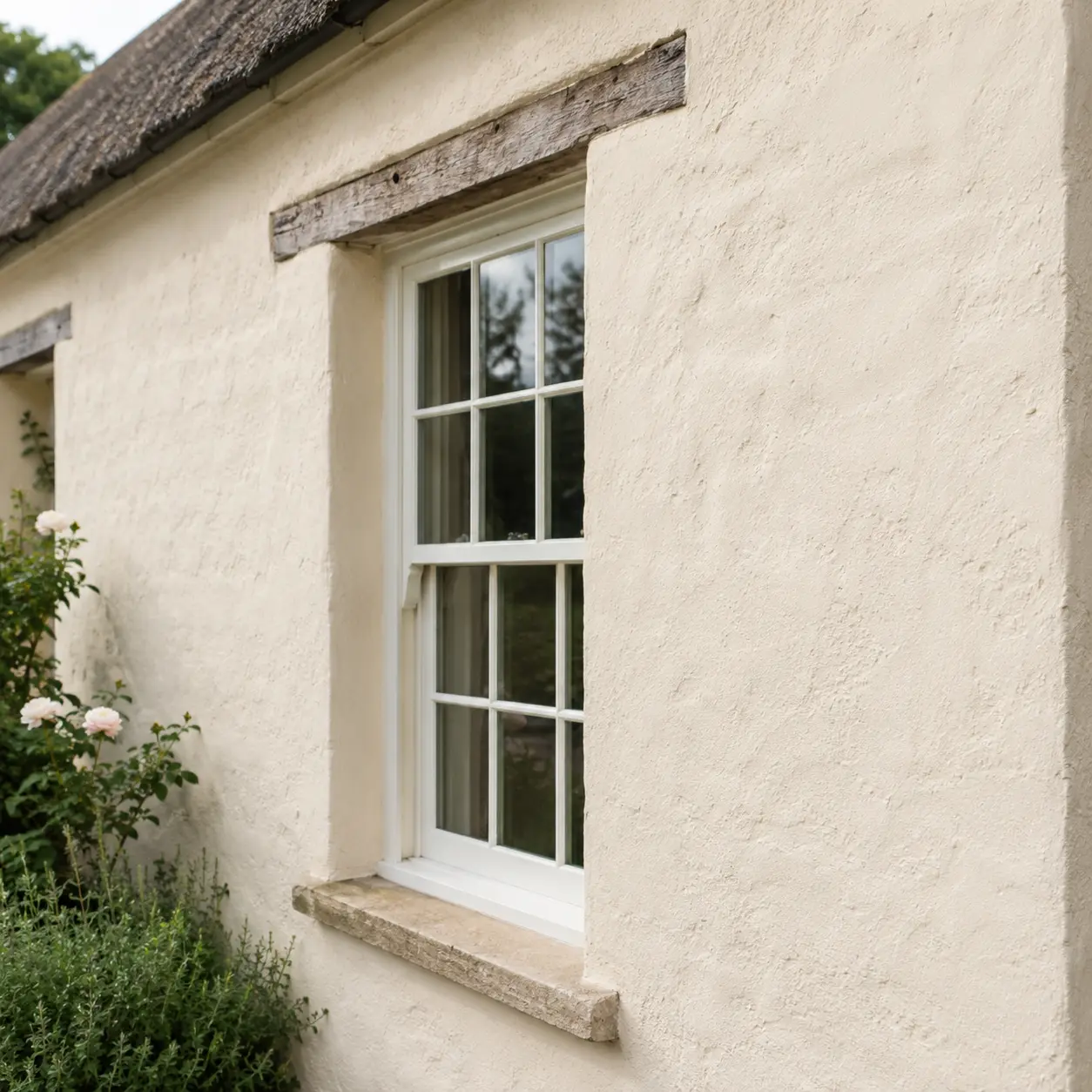
Lime render does not "dry" in the conventional sense. It cures through a chemical process. Each coat typically requires a minimum of 3 to 7 days before the next coat is applied, depending on temperature, humidity, and the specific lime product. Full carbonation of a lime putty render can take months. Natural hydraulic lime (NHL) cures more quickly through hydraulic reaction. The total programme for a full external lime render system is typically several weeks, not days. Anyone quoting a shorter programme is cutting curing time, which causes render failure.
Can you paint lime render?
Yes, but only with breathable paints, specifically lime wash or silicate mineral paint. Standard exterior masonry paint is not appropriate for lime render as it reduces vapour permeability, trapping moisture and causing the same problems as cement render. Lime render must also be fully cured before decoration, typically 3 to 6 months after completion. Riley's advises on correct decoration specification as part of every lime render project.
How many coats does lime render need?
External lime render is applied in a minimum of three coats: scratch coat, float coat, and finish coat. On uneven or damaged substrates a dubbing-out coat may be required first. Internal lime plaster is typically applied in two coats on solid masonry. The number of coats affects the programme and cost. Any single-coat lime render system is a compromise and will not perform as well.
What sand should be used with lime render?
The sand specification is as important as the lime specification. For NHL render, a sharp sand or grit sand of the correct grade is used for scratch and float coats; a finer sand for the finish. The sand must be clean, well-graded, and free from clay content. In Devon and Cornwall, locally sourced sands can add to the regional character of the render. Riley's sources appropriate aggregates for each project.
How do you maintain lime render?
Lime render is relatively low-maintenance compared to cement renders. The main requirement is periodic inspection and prompt repair of any cracks or areas of failure before water ingress becomes established. Lime wash or silicate paint should be reapplied every 5 to 10 years depending on exposure. Keep vegetation clear of the render surface. Address any defects in gutters and downpipes promptly. Prolonged water running over lime render will erode the surface over time.
Is lime render suitable for modern properties?
Lime render can be used on modern properties where breathability is preferred, where ecological considerations are important (lime is a natural, low-carbon material), or where a traditional aesthetic is desired. However, for most modern cavity-wall or insulated frame construction, a polymer-modified or silicone render system is technically more appropriate. Riley's will advise on the correct system for your specific building. We do not apply lime render where it is not the right choice.