Decorative Polished Plaster · Residential & Commercial

Venetian Plastering in Plymouth, Devon & Cornwall

Hand-applied, hand-polished Venetian plaster for interiors that demand something beyond ordinary. A centuries-old technique delivering a finish that is genuinely distinctive.

What Is Venetian Plastering?

Venetian plaster, also known as polished plaster or marmorino, is a multi-layer decorative technique originating in Venice, where marble dust and lime were combined to create walls that mimic the depth and lustre of natural stone. Applied in successive thin layers and polished between each one, the finished surface has a translucency and movement that paint cannot replicate.

The technique requires skill and patience. Each layer is applied by hand with a stainless steel trowel, cross-hatched at varying angles to build depth and tone. Between layers, the surface is burnished to consolidate it and develop the characteristic sheen. The final polish brings the surface to a high gloss or satin finish depending on the specification.

Riley's Pro Trowel has applied Venetian plaster across residential and commercial properties in Plymouth, Devon, and Cornwall, from feature walls in private homes to entire hotel interiors. The technique suits both traditional and contemporary interiors: at home in a Georgian townhouse and equally striking in a modern apartment.
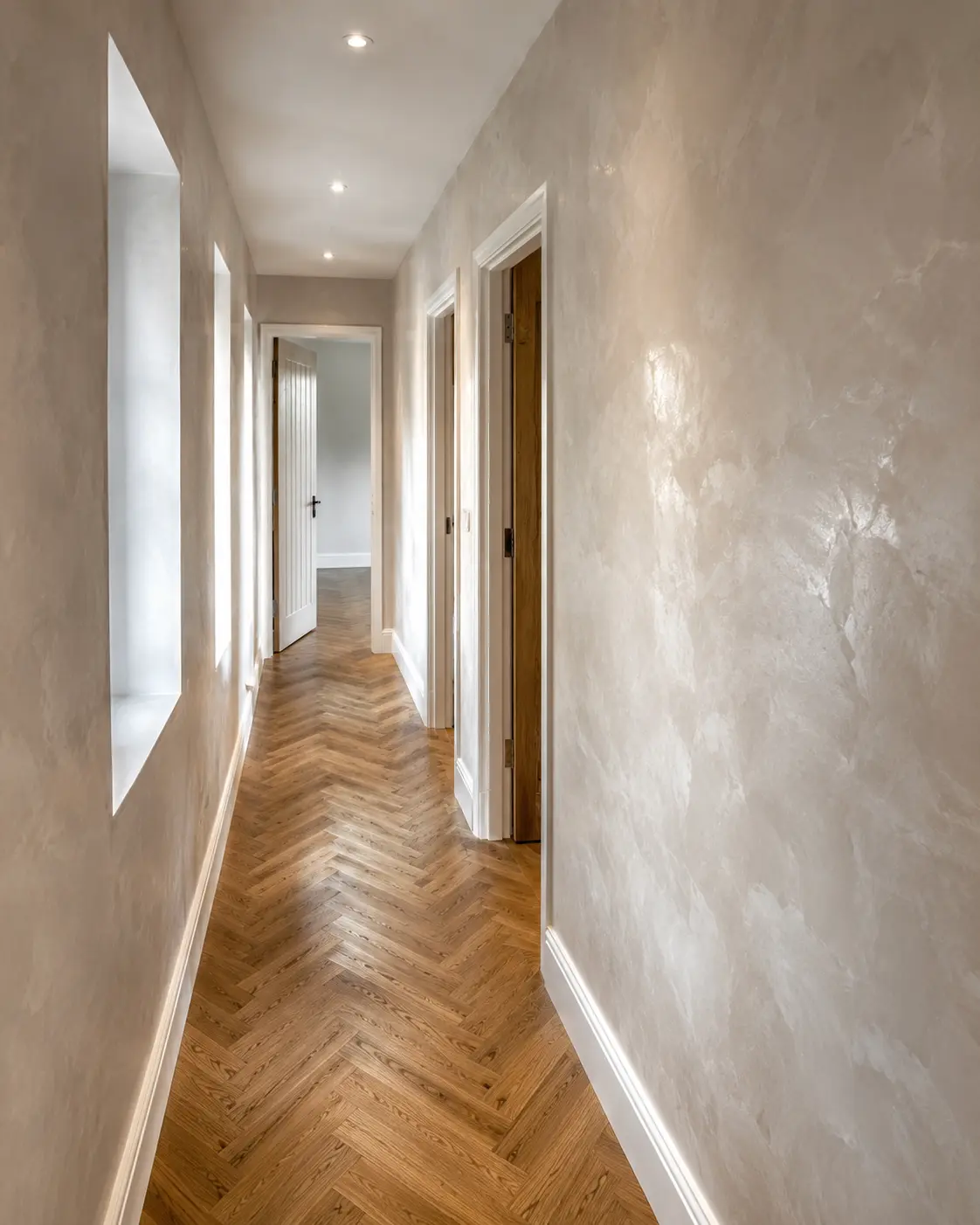
Practical Benefits

Beyond aesthetics, Venetian plaster is durable. Properly applied, it will outlast paint by decades. Its lime composition gives it natural mould resistance, making it particularly well-suited to kitchens, bathrooms, and any room where moisture is present. It can be applied to walls and ceilings. It is also repairable: unlike wallpaper or tiled finishes, a damaged area of Venetian plaster can be touched in without visible joins.

Finishes Available

  • High gloss (mirror-like, maximum depth)
  • Satin (softer lustre, most commonly specified)
  • Matt polished (contemporary, textured depth)
  • Marmorino (granular marble effect)
  • Travertine effect (fossil-stone appearance)
  • Custom colour matching available throughout
Venetian plastering finish — Riley's Pro Trowel Devon

How We Work

Our Process

01

Substrate Preparation

The wall must be flat, sound, and correctly primed. Any unevenness is corrected before the decorative coats begin. A pigmented base coat is applied to provide the tonal foundation for the finish.

02

First Coat: Establishing Depth

The first coat of Venetian plaster is applied in thin, random passes with a stainless steel trowel. Cross-hatch direction creates the base layer of the depth effect. Left to cure.

03

Second Coat: Building the Finish

A second coat is applied over the first, again in thin passes. Colour variation, veining, or specific effects are developed in this layer. The surface starts to consolidate into the characteristic translucent quality.

04

Burnishing

Between and after the final coats, the surface is burnished with a clean trowel in tight circular movements. This consolidates the plaster, closes the surface, and generates the characteristic lustre through friction.

05

Final Polish & Sealing

The final surface is polished to the specified gloss level. A beeswax or specialist sealant is applied where appropriate to protect the finish and enhance depth. The result is inspected in raking light before sign-off.

Questions

Frequently Asked Questions

Venetian plaster can be applied to plasterboard, solid plaster, blockwork, brick, and concrete, provided the substrate is flat, stable, and correctly prepared. It is suitable for walls and ceilings in residential and commercial interiors. It is not suitable for exterior application. The substrate must be primed correctly for the specific Venetian plaster product being used.
Properly applied Venetian plaster is extremely durable. Its lime composition gives it hardness and resistance to impact. In areas of higher wear, such as around light switches, skirting-board height, or in commercial spaces, a sealant coat provides additional protection. Unlike paint, Venetian plaster does not peel or flake. A surface properly applied 20 or 30 years ago, with normal care, will still look excellent today.
Yes. The lime composition of Venetian plaster gives it natural resistance to mould and moisture. In bathrooms and wet rooms, a sealant coat is applied over the finished plaster to provide waterproofing. The result is a surface that is both beautiful and practical, and far more distinctive than standard tile or paint finishes.
A typical feature wall takes one to two days including substrate preparation and multiple coats with curing time between. A full room takes two to four days depending on size and complexity of the finish specified. Programme is confirmed in the quotation.
Venetian plastering is priced per square metre based on the area, the finish specified, and the substrate condition. It is a premium finish and is priced accordingly, but the longevity and quality of the result justify the investment compared to redecoration cycles for paint. We provide written quotations following a site visit or measurement.

Get Started

Request a Quote

We visit the site, assess what's needed, and provide a written quote. No hidden additions.

Ready to Start?

Talk to Us About Your Project